A practical look at the workflow
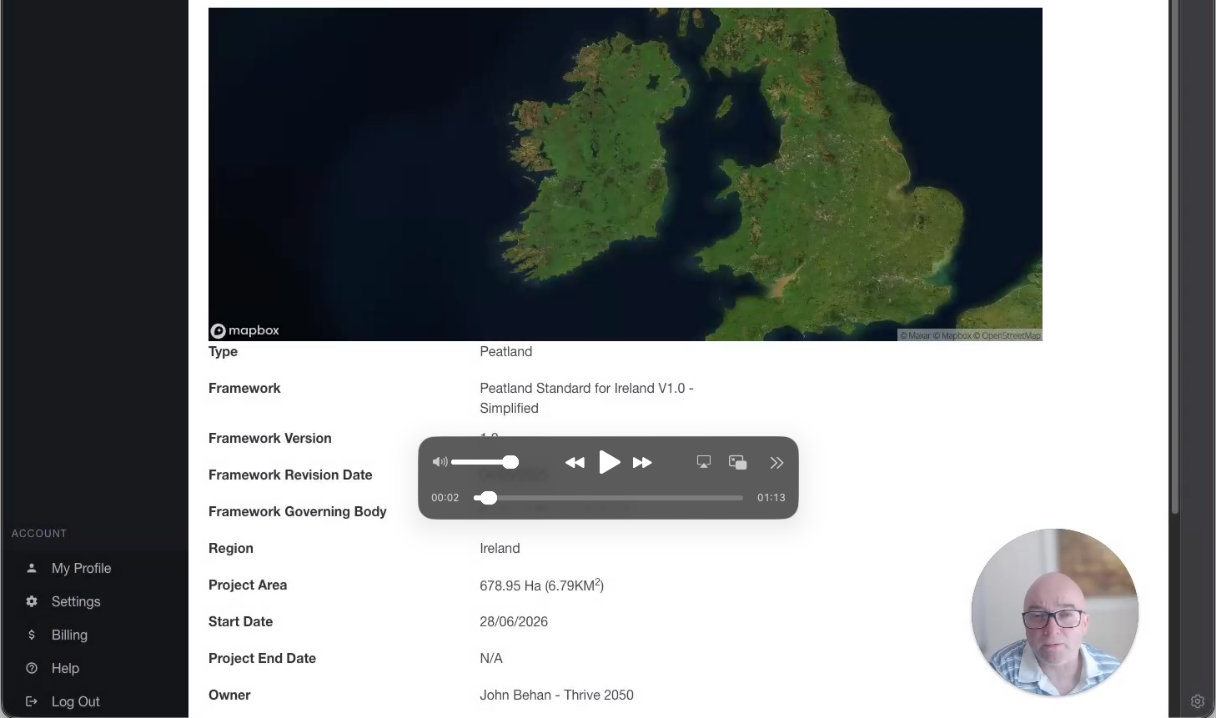
The one-minute video below shows the main workflow in Thrive 2050 using an existing project.
It starts with an existing project and shows how its maps, monitoring data, documents and reporting requirements are brought together in Thrive. That information can be aligned with the selected standard and used to generate a report structured for submission to a certifier.
Everything shown in the demonstration is working in Thrive today. This is not a concept video or a preview of a future product. It is a brief look at the current platform.
The point is not any single screen or feature. It is that the map, monitoring data, supporting documents, project phases, history and reporting requirements can form one connected evidence workflow.
Keeping a reliable source of truth
When project information is scattered across separate systems, one of the first problems is knowing which version to trust.
Documents get copied and sent between people. One version is updated while another is not. Maps sit in one system, monitoring results in another and supporting files somewhere else. As the project changes over time, keeping those records aligned becomes increasingly difficult.
This matters because certification is not a one-off exercise.
The first year may involve a heavy lift to organise the evidence and meet the requirements of the relevant standard. When the next monitoring or reporting period arrives, the team should not have to reconstruct that work from folders, spreadsheets and disconnected systems.
The aim of Thrive is to keep the evidence aligned with the standard as the project develops. Changes can be recorded over time, with a history showing what happened, while the underlying data remains connected to the reporting process.
That gives the project team a clearer source of truth and a practical starting point for the next reporting cycle.
Working across different frameworks
Projects do not all follow the same framework, so we have not built Thrive around a single standard or project type.
The demonstration shows framework options including IUCN, the Peatland Standard for Ireland and Verra. Frameworks can be added through configuration. The platform has been designed so that its underlying evidence workflow can be configured around different requirements.
For a project developer, that flexibility matters. The framework may differ, but the practical need remains much the same: bring the relevant maps, data and documents together, understand what the standard requires, maintain a clear record over time and prepare the evidence for the certification process.
We are proud of what we have built. The product shown here is real, working and ready to be used. We think it is genuinely useful, and this short demonstration is an invitation to take a closer look.
If the workflow reflects a problem you are dealing with, contact us for a 15-minute demonstration.